
How to Evaluate a Passive Income Idea Before You Commit

A passive income idea can look great on the surface and still be a poor fit.
The projected revenue may sound attractive. The return potential may seem worth chasing. But once you look closer, the idea may require more startup capital, ongoing work, patience, or risk than expected.
That is why the decision should not start with excitement. It should start with fit.
When you evaluate a passive income idea, the goal is not to find the most exciting opportunity. It is to determine whether its cost, workload, return timeline, and long-term demands fit your finances, schedule, skills, and patience.
This article is for educational purposes only and should not be treated as financial advice.
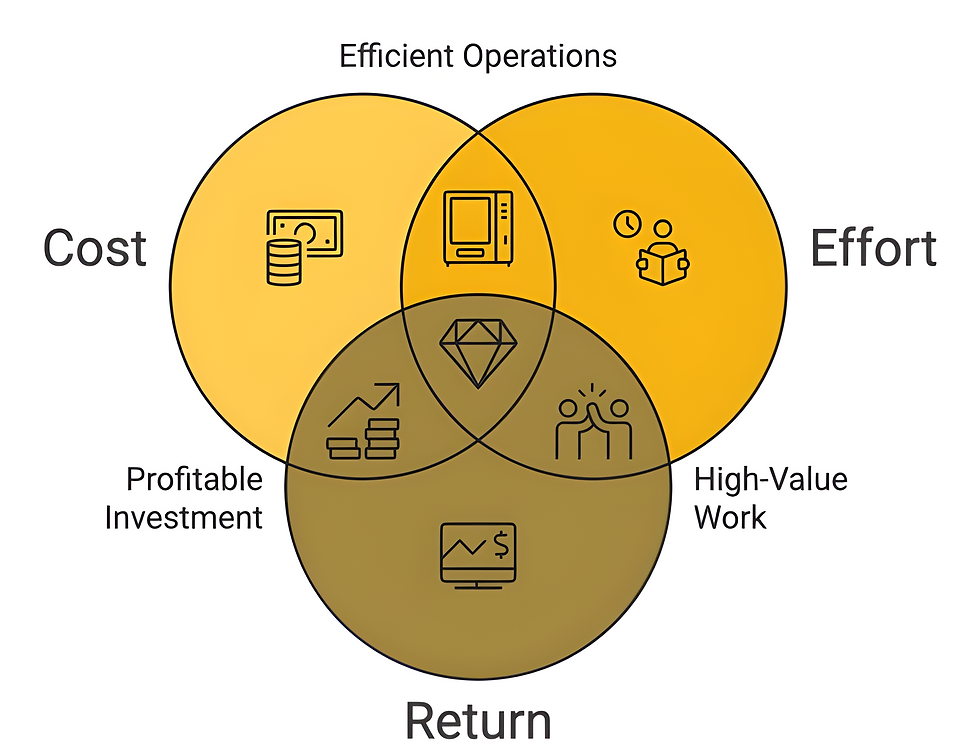
Use The CER Framework Before You Commit
The simplest way to evaluate passive income opportunities is to use the CER Framework:
Cost
Effort
Return
These three areas help you see an idea's full profile before you invest time or money.
A rental property, vending route, online product, content site, licensing deal, or small service-based asset can each produce income in different ways. But each one still has a cost profile, an effort profile, and a return profile.
Many people make the mistake of looking only at the upside.
They ask:
How much could this make?
What is the potential return?
How fast could it grow?
Those questions matter, but they are incomplete. A better question is:
Does this opportunity fit my money, time, patience, and ability to execute?
That is the heart of evaluating a passive income idea in a disciplined way.
Gather Realistic Inputs First
Before scoring or comparing anything, collect the basic facts. Do not rely on best-case examples, sales pages, or other people’s highlight reels.
Spend about 30 minutes gathering the most realistic numbers and requirements you can find. The goal is not perfection. The goal is to replace vague optimism with working assumptions.
Look for:
Startup costs
Required equipment, software, inventory, or licenses
Monthly or annual recurring costs
Expected setup work
Ongoing maintenance work
Time before income may start
What has to happen before the idea earns its first dollar
What the income might look like once the system is operating normally
If you cannot find a reliable answer, mark it as missing. Missing information is not a small detail. It is part of the risk.
For example, if you know the startup cost but do not know the monthly maintenance cost, you do not yet understand the opportunity. If you know the potential yield but not the time required to reach it, you are still guessing.
Evaluate The Five Core Components
The CER Framework becomes most useful when you break it into five practical components.
Cost
Cost includes more than what you need to get started.
Look at three types of cost:
Startup Cost
The money needed to get the income source off the ground.
Recurring Cost
The ongoing expenses required to keep it running.
Opportunity Cost
The money, time, or attention you cannot use elsewhere once you commit.
Opportunity cost is easy to ignore. If an idea requires cash that would otherwise stay in savings, pay down debt, support your main business, or fund a better fit, that tradeoff matters.
A passive income business may be affordable on paper but still strain your finances if it reduces your flexibility too much.
Setup Effort
Setup effort is the work required before the idea can begin producing income.
This might include research, product creation, property setup, system building, vendor selection, customer acquisition, legal paperwork, or technical setup.
Ask:
What has to be built before this can earn?
Can I do that work myself?
Do I need outside help?
How much focused time will this take?
What skills are required during setup?
Many passive income ideas are not passive at the beginning. They often require concentrated effort before any return appears.
That setup period is not a problem by itself. It becomes a problem only when you don't plan for it.
Ongoing Effort
Ongoing effort is the work required after launch.
This is where many ideas get misjudged. Something may sound passive because it does not require daily labor, but it may still require regular decisions, maintenance, customer support, restocking, updates, bookkeeping, or vendor management.
Ask:
What needs to happen every week or month?
What breaks if I stop paying attention?
Who handles problems?
Can the work be delegated?
Does delegation reduce the return too much?
A good opportunity should fit your real schedule, not your ideal schedule.
Time To First Dollar
Time to first dollar measures how long it may take for the idea to produce any income.
This is different from long-term return. An idea may have strong future potential but still require a long wait before cash comes in.
Ask:
What must happen before revenue starts?
Is there a clear path to the first sale, payment, renter, customer, or distribution?
How long can I wait without becoming stressed or impatient?
This matters because long delays can create pressure. Pressure leads to rushed decisions, underfunding, or quitting too early.
Steady-State Yield
Steady-state yield is the return potential once the income source operates more stably.
Do not evaluate this only from best-case numbers. Look at the likely return after recurring costs, maintenance, platform fees, taxes, repairs, refunds, vacancies, or other normal expenses that apply to the model.
Ask:
What might this produce after the system is running?
What costs continue after launch?
How much work remains attached to that return?
Is the likely return worth the cost and effort?
The key is to compare return against the full profile, not in isolation.
Pressure-Test The Opportunity Before Deciding
Once you have the five CER components, slow down and test your assumptions.
Look for common mistakes:
Underestimating startup costs
Ignoring recurring expenses
Treating setup work as smaller than it is
Calling something passive when it needs frequent attention
Assuming income will start quickly
Focusing on steady-state return while ignoring the path to get there
Next, apply the Five-Year Patience Test.
Ask yourself:
If this takes five years to become truly worthwhile, would I still be glad I chose it?
This does not mean every opportunity should take five years. It means you are testing your patience, interest, and long-term fit. Some ideas only look good when you imagine them as quick wins. If the long version feels unbearable, that is useful information.
When two ideas look close, compare them using three fit factors:
Skills
Which idea matches what you already know or can realistically learn?
Customer Access
Which idea gives you a clearer path to buyers, users, tenants, clients, or demand?
Long-Term Fit
Which one fits the kind of work, risk, and involvement you can sustain?
These factors often matter more than the idea that sounds most exciting.
Make A Go, No-Go, Or Wait Decision
After your review, choose one of three decisions.
Go means the opportunity fits your finances, effort capacity, expected return, and patience.
No-Go means the mismatch is too large. The idea may be valid for someone else, but it is not the right fit for you right now.
Wait means the idea may work, but you need more information, more savings, more time, better skills, or more reliable assumptions before committing.
For any significant commitment, wait 24 hours before acting. That pause gives you time to reconsider the opportunity after the initial excitement has passed.
A sound passive income decision is not based on excitement alone. It comes from understanding the full cost, the real work involved, the time to first dollar, and the likely steady-state return. Use the CER Framework before you commit so you can decide based on fit rather than hype.


